Weighted jump ropes: are they worth it?
Heavier ropes make your shoulders and grip work harder and slow everything down. Useful for some goals, a hindrance for others.

Key points
- Weighted cable: whole-body, slower. Weighted handles: grip and forearms.
- Not ideal for speed, footwork or double unders.
- Start light and keep a normal rope for skill days.
A weighted rope turns more slowly and makes your shoulders, arms and grip work harder. It is a different tool, not an upgrade: great for strength-endurance and steady conditioning, worse for speed and footwork.
Two kinds of weighted rope
| Type | What is heavy | Feels like |
|---|---|---|
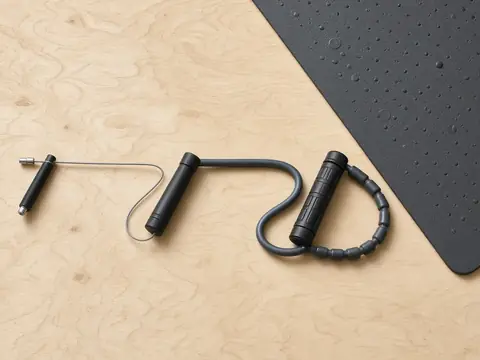
| Weighted cable or cord | The rope itself | Slower, smooth arc; the whole upper body works |
| Weighted handles | The handles | Rope still spins fast; mostly forearm and grip work |
Sellers label weight differently (total weight, rope weight only, or per handle), so compare like with like.
Who it suits
- People who already skip comfortably and want more upper-body work in the same session.
- Boxers and other athletes doing shoulder conditioning.
- Beginners who find a light rope too fast to feel: a slightly heavier rope can make timing easier. Very heavy ropes are a different matter.
Downsides
- Slower turns mean fewer jumps and less footwork practice.
- Double unders and tricks are much harder.
- A missed jump with a heavy rope hurts.
- Shoulders and wrists need time to adapt: start with short rounds.
Starter weighted rope workout (12 minutes)
- Warm-up with a normal rope or no rope, 3 minutes.
- 6 rounds: 30 s weighted basic bounce, 30 s rest.
- 3 rounds: 20 s fast weighted turns with an alternate step, 40 s rest.
- 1 minute walking, then shoulder and calf stretches.
How heavy?
Choose the lightest weighted option you can find for your first one. If it changes your form (big shoulder swings, hunched back), it is too heavy for now. Keep using a normal rope for speed and skill days.
For rope types and sizing in general, see choosing and sizing a rope.